
By Zekarias Sintayehu
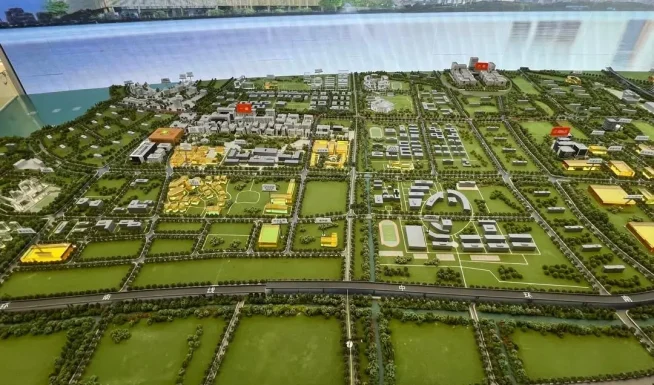
A detailed 3D architectural scale model showcasing the layout and phased expansion of BioBAY, located within Suzhou Industrial Park (SIP). Home to over 600 biomedical companies and nearly 40,000 talents, BioBAY serves as a premier pharmaceutical and life-sciences hub.
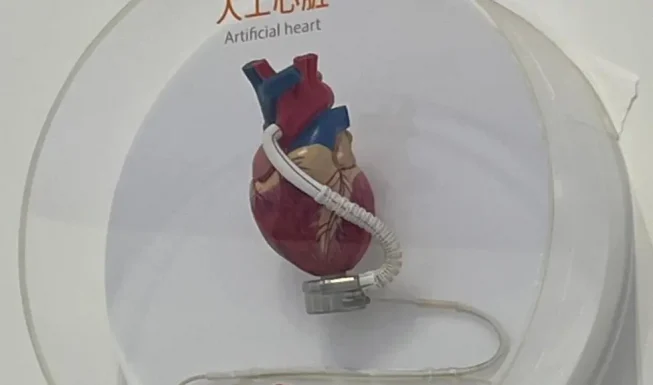
An artificial heart displayed at BioBAY in Suzhou Industrial Park. The device gained notable attention after being used by a 61-year-old patient in China for eight years before receiving a natural heart transplant, demonstrating how medical research clusters can bridge advanced science and life-extending care.
China’s industrial evolution offers a powerful blueprint for Ethiopia’s economic future. Drawing insights from the high-tech Suzhou Industrial Park and the BioBAY life-sciences hub, this piece explores how Ethiopia can transform its Eastern Industrial Zone in Dukem from a basic manufacturing hub into a thriving center for innovation, technology transfer, and local value creation, writes Zekarias Sintayehu, from Suzhou, China.
—–
Industrial parks can become much more than places where factories operate. With the right policies, infrastructure, investment and research ecosystem, they can develop into centers of innovation, technological advancement and international cooperation.
This was one of the strongest impressions from my recent visit to Suzhou, in China’s Jiangsu Province, where I learned about the development of Suzhou Industrial Park (SIP), met with local leaders, and visited BioBAY, a pharmaceutical and life-sciences innovation complex. The experience offered valuable insights into how Ethiopia could deepen its industrial partnership with China, particularly through the relationship between Suzhou Industrial Park and Ethiopia’s Eastern Industrial Zone in Dukem.
The connection between these two industrial development experiences presents an opportunity to move beyond investment in manufacturing alone and toward a broader partnership built on technology, research, skills development and local value creation.
From industrial cooperation to global competitiveness
Established in 1994 through cooperation between China and Singapore, Suzhou Industrial Park has developed into one of China’s notable examples of industrial planning and international economic cooperation. Its experience demonstrates how a carefully developed industrial ecosystem can attract foreign investment, nurture domestic enterprises and support the growth of advanced industries.
During a presentation by Suzhou Mayor Wang Wei, the scale of the city’s economic development and its international engagement stood out. The presentation highlighted Suzhou’s strong industrial base, research and development investment, extensive partnerships with universities and research institutions, and its trade links with countries participating in the Belt and Road Initiative.
“One particularly striking figure presented during the visit was that Suzhou Industrial Park had attracted 174 Fortune Global 500 companies. This illustrates the park’s ability to attract major international businesses and position itself within global production and investment networks.”
However, the significance of SIP extends beyond the number of companies operating there. Its experience shows the importance of creating an environment in which businesses can access infrastructure, skilled workers, research institutions, technology, suppliers and international markets within an integrated economic ecosystem.
For Ethiopia, this is an important lesson. Attracting investors is essential, but retaining them, encouraging them to expand and helping local businesses participate in their supply chains are equally important. Industrial parks become more valuable when they help build capabilities that remain in the host country long after an individual investment has been made.
A bridge between Suzhou and Ethiopia
The relationship between Suzhou’s industrial development experience and Ethiopia’s Eastern Industrial Zone offers a practical starting point for strengthening economic cooperation between the two countries.
Located in Dukem, near Addis Ababa, the Eastern Industrial Zone is an important example of Chinese investment in Ethiopia’s industrial development. It has contributed to the country’s efforts to expand manufacturing capacity, attract foreign businesses and create employment opportunities.
The two industrial parks operate in different economic contexts and at different stages of development. Nevertheless, their connection creates room for cooperation in areas such as industrial management, investor services, workforce training, supplier development and technology transfer.
Ethiopia can learn from Suzhou’s experience in developing an industrial ecosystem that links manufacturers with research institutions, specialized suppliers and skilled professionals. Cooperation could include exchanges between industrial park managers, technical training programmes, partnerships between Ethiopian and Chinese universities, and structured opportunities for Ethiopian companies to learn from businesses operating in Suzhou.
Chinese companies could also be encouraged to use their investments in Ethiopia as a foundation for developing local supplier networks, training Ethiopian engineers and technicians, and gradually expanding activities into more technologically advanced production.
The objective should not simply be to reproduce the Suzhou model in Ethiopia. Ethiopia has its own economic priorities, labour market, resources and development challenges. The more practical approach is to adapt relevant lessons to local conditions and build an industrial model that supports Ethiopia’s long-term economic transformation.
BioBAY: Where research meets industry
My visit to BioBAY, located within Suzhou Industrial Park, provided a closer look at how China is working to strengthen innovation and technological advancement.
The pharmaceutical and life-sciences complex brings together start-ups, growing companies and major businesses working across areas such as drug development, biotechnology, medical technology and diagnostics. The presentation described an ecosystem that supports companies from research and development through commercialization and industrial production.
According to the information presented during the visit, BioBAY has developed into a major life-sciences cluster, with more than 600 biomedical companies and approximately 40,000 talents. Its facilities and phased expansion reflect an effort to provide space and specialized infrastructure for businesses working in research, development and advanced manufacturing.
What makes this approach significant is the relationship between scientific research and commercial application. Innovation does not end when a laboratory produces a promising result. It must continue through testing, development, manufacturing, investment and access to markets.
BioBAY illustrates how an industrial cluster can help create the conditions for this process by bringing businesses, researchers, technical professionals and investors into a shared environment. Its focus on pharmaceuticals and medical technology also shows that industrial development can extend beyond conventional manufacturing into knowledge-intensive sectors.
This experience has relevance for Ethiopia, where industrial policy can increasingly explore opportunities in pharmaceuticals, medical supplies, diagnostic products, agricultural technology and other sectors in which technical knowledge and local capabilities are essential.
Such development requires sustained investment in education, research, reliable infrastructure, regulation and partnerships between public institutions and private companies. It also requires patience: building a competitive innovation ecosystem is a long-term process rather than an achievement that can be accomplished by constructing industrial facilities alone.
An artificial heart and the human meaning of innovation
One of the most memorable stories shared during the visit concerned an artificial heart.
We were told about an individual in China who received an artificial heart at the age of 61 and used it for eight years before later receiving a natural heart. The device was described during the visit as having been manufactured by a company associated with the innovation ecosystem being presented.
The story offered a powerful illustration of what technological advancement can mean beyond statistics, investment figures and industrial expansion. Medical innovation can directly affect the length and quality of a person’s life, offering possibilities that were once difficult to imagine.
It also highlights the importance of the institutions and businesses that make advanced medical technology possible. Such achievements depend on scientific research, engineering expertise, testing, manufacturing capacity and cooperation among specialists.
“For Ethiopia, the lesson is not that the country can immediately reproduce every advanced technology developed in China. Rather, it is that investment in knowledge, technical education and partnerships can gradually strengthen domestic capacity. Cooperation with Chinese research institutions and medical technology companies could support skills development, equipment maintenance, local production where feasible, and improved access to appropriate technologies.”
From technology transfer to local capability
China’s experience suggests that successful industrial development depends on more than attracting capital. It requires a continuous process of upgrading skills, improving production, investing in research and helping businesses compete in changing markets.
For Ethiopia, industrial cooperation with China should therefore place greater emphasis on building local capabilities alongside investment. Factories and industrial parks can create employment, but their long-term contribution becomes greater when Ethiopian workers acquire technical skills, domestic suppliers gain access to new markets, and local companies learn to produce higher-value goods.
There is also an opportunity to expand cooperation beyond established manufacturing sectors. Ethiopia’s agricultural base, growing urban economy and demand for health services create potential areas for partnerships in food processing, pharmaceuticals, medical supplies, packaging and technology-enabled production.
The experience of BioBAY suggests that specialized industrial clusters can be particularly useful when businesses require advanced facilities, technical expertise and close links with research institutions. While Ethiopia would need to assess the feasibility of each sector carefully, the broader principle is relevant: industrial policy should connect production with learning and innovation.
The relationship between Suzhou Industrial Park and the Eastern Industrial Zone could help advance this agenda through business-to-business exchanges, technical training, joint ventures and more structured cooperation between educational and research institutions. Such initiatives would be most effective if they were tied to measurable outcomes, including Ethiopian skills development, local supplier participation, technology adoption and growth in value-added production.
A partnership with a longer-term vision
Ethiopia and China have an opportunity to deepen their economic relationship by building on existing industrial cooperation and directing more attention toward innovation and technological advancement.
Suzhou Industrial Park demonstrates how international cooperation, industrial planning and an innovation-oriented ecosystem can help a city strengthen its position in global markets. BioBAY offers a more specialized example of how research, entrepreneurship and advanced manufacturing can be brought together to support new technologies.
For Ethiopia, the challenge is to translate these lessons into practical measures that reflect its own development needs. The Eastern Industrial Zone can serve as one platform for strengthening this partnership, provided that cooperation increasingly supports local skills, domestic enterprises and the development of higher-value industries.
The next stage of Ethiopia–China industrial cooperation should not be measured only by the number of factories established or the volume of foreign investment attracted. It should also be judged by the knowledge acquired, the technologies adapted, the local businesses strengthened and the opportunities created for Ethiopian professionals.
The connection between Suzhou and Ethiopia is therefore about more than industrial parks. It is about how international cooperation can help transform investment into lasting productive capacity—and how technological advancement can become a shared foundation for economic development.
Source: The Abyssinian Times
*The article reflects the authors’ opinions and not necessarily the views of BRJN.