
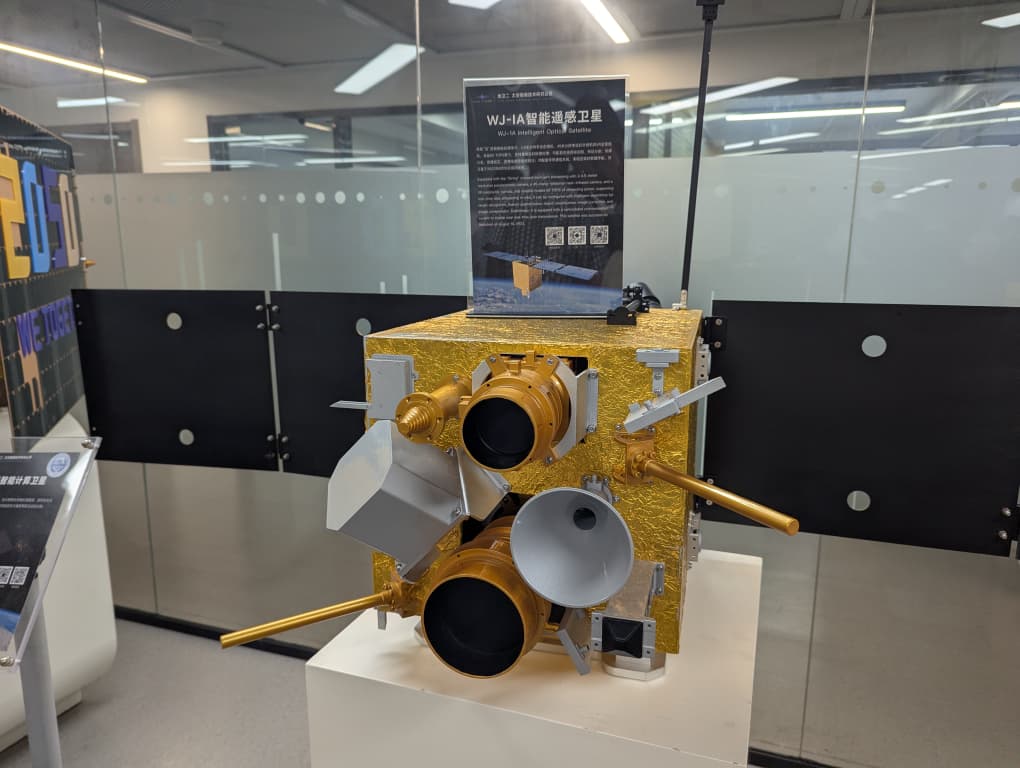
From monitoring crops and tracking environmental changes to managing disasters and urban growth, the ability to access accurate information from space has moved from being a long-term scientific ambition to an everyday operational need.
This shift has also pushed aerospace companies to rethink not only how satellites are built, but how they process and deliver data. Increasingly, the focus is turning toward intelligent systems that can analyze information directly in orbit, reducing delays and improving the speed of decision-making.
It is within this fast-evolving space industry that Star Vision Aerospace Group Ltd, a Chinese AI-native aerospace company headquartered in Zhejiang Province, is positioning itself as both a technology developer and a global partner in satellite innovation, including cooperation with emerging space actors such as Rwanda.
During a recent interview with IGIHE at Star Vision headquarters in Hangzhou, the capital of China’s Zhejiang Province, Curtis Ma, Director of Global Alliance at Star Vision, outlined how the company is building what it calls “AI-native” satellites and expanding its international footprint.
“Star Vision is an AI-native aerospace company,” Curtis said. “When we say AI-native, it means that all of the satellites we have launched so far are equipped with AI payloads.”
According to him, the integration of artificial intelligence into satellite systems is not just a technological upgrade but a response to long-standing inefficiencies in data delivery. Traditionally, satellite data would take days to be processed and transmitted back to Earth, limiting its usefulness in time-sensitive situations.
“The reason we make satellites smart is that previously, when you wanted data from a satellite, it would take a long time—about two to three days,” he explained. “The delay was too much. But right now, with our AI payload, the satellites can do edge computing. They can extract useful information directly from satellite data and send it back to the ground very quickly. We can now receive data within an hour.”
Beyond efficiency, Star Vision’s technological model is also defined by its international reach. The company has already entered the global commercial satellite market, including partnerships beyond China.
“We are also the first company to have exported commercial satellites to foreign countries, specifically to the Sultanate of Oman in 2024, where we launched our first national AI satellite,” Curtis noted.
Star Vision is also expanding its ambitions into deep space exploration, marking a transition from Earth-focused satellite operations to lunar missions. The company is part of China’s broader lunar exploration initiative.
“In addition, we are the first commercial company to join the Chinese lunar exploration project,” Curtis said. “We will launch two lunar robots to the south pole of the lunar surface between 2028 and 2029.”
Yet, beyond its technological milestones, the company places strong emphasis on openness and collaboration. Curtis stressed that Star Vision’s satellite ecosystem is designed to be accessible to international partners rather than operating in isolation.
“Our satellite system is not a closed environment. We open the platform to our foreign partners all over the world,” he said.
One of the most notable examples of this approach is Star Vision’s collaboration with Rwanda. In 2023, the company worked with the Rwanda Space Agency and Rwandan students to develop AI-driven space applications.
“In 2023, we worked with the Rwanda Space Agency and co-developed an AI algorithm for space with students and young talents from Rwanda,” Curtis said.
The collaboration focused on developing a ground segmentation algorithm over a period of several months. Once completed, it was deployed into orbit and is now actively processing satellite imagery.
“We spent a couple of months developing a ground segmentation algorithm, which we successfully uploaded to our satellite. It is now running well and sending data back to the ground,” he added.
The system allows for the identification of different land features, offering practical insights for environmental monitoring and planning.
“With the Rwanda-developed algorithm and the contribution of Rwandan students, we are able to analyze the ground and identify different features—for example, rivers, grasslands, agricultural farmland, and living areas,” Curtis explained.
He described this as a clear demonstration of how collaborative research and development can translate into real-world applications in space technology.
“This is the benefit of our own R&D, combined with contributions from Rwandan students.”
Launched in 2021, Star Vision operates five satellites in orbit. In total, its research and development efforts have resulted in more than 30 satellites being launched into space, reflecting the company’s rapid expansion in the global aerospace sector.
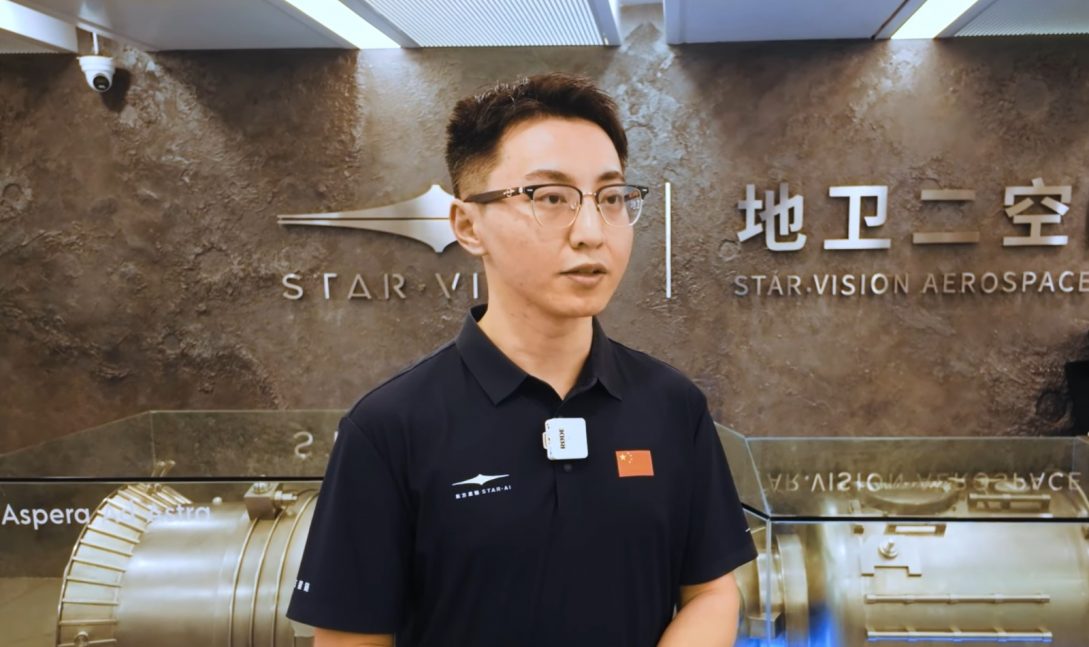
Curtis Ma, Director of Global Alliance at Star Vision disclosed plans to launch two lunar robots to the south pole of the lunar surface between 2028 and 2029.
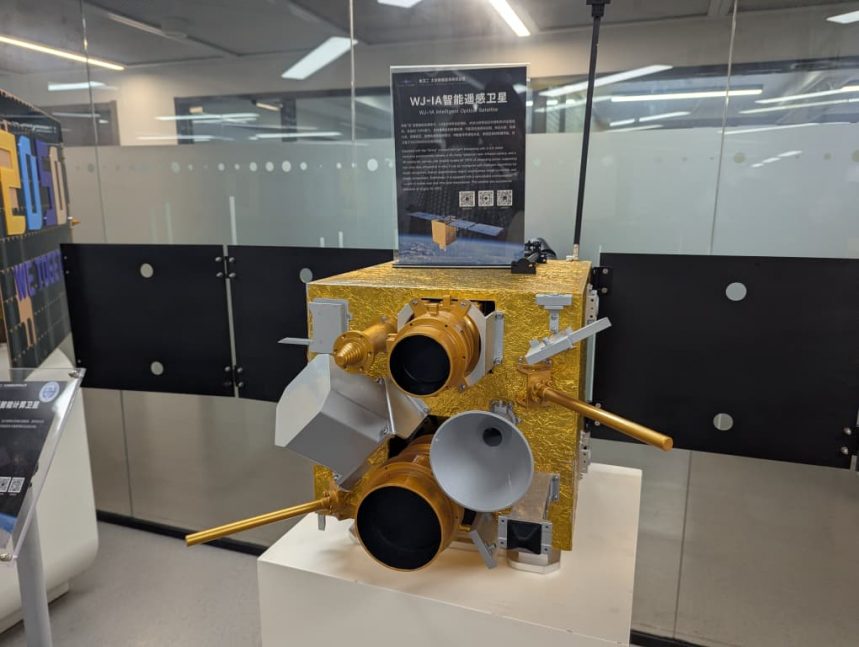
Star Vision satellite WJ-1A runs a ground segmentation algorithm co-developed by the Rwanda Space Agency to independently process images, eliminating the need for data downloads and facilitating real-time land usage assessment.
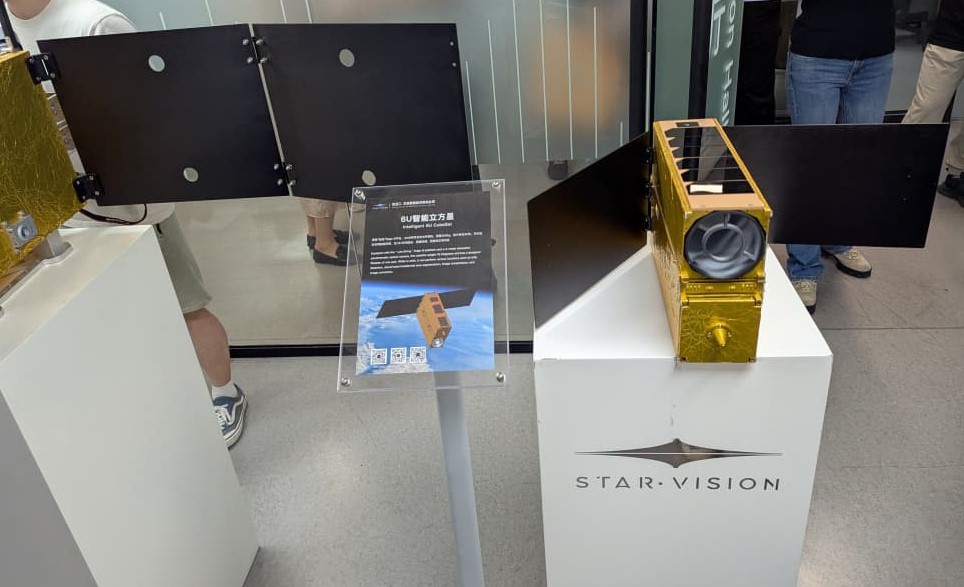
Star Vision’s AI-native satellites are equipped with onboard artificial intelligence systems that process satellite data directly in orbit, significantly reducing the time needed to deliver critical information back to Earth.
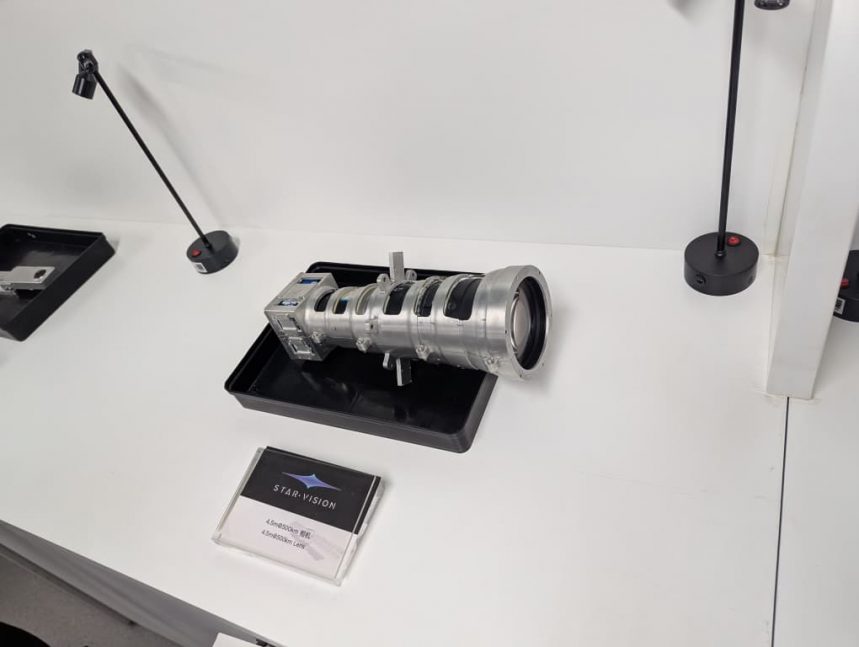
Since its establishment, Star Vision has contributed to the launch of more than 30 satellites, reflecting the company’s growing role in the global commercial aerospace industry.
Source: IGIHE
Video: Zacharie Itangamahoro
The article reflects the authors’ opinions and not necessarily the views of BRJN.